

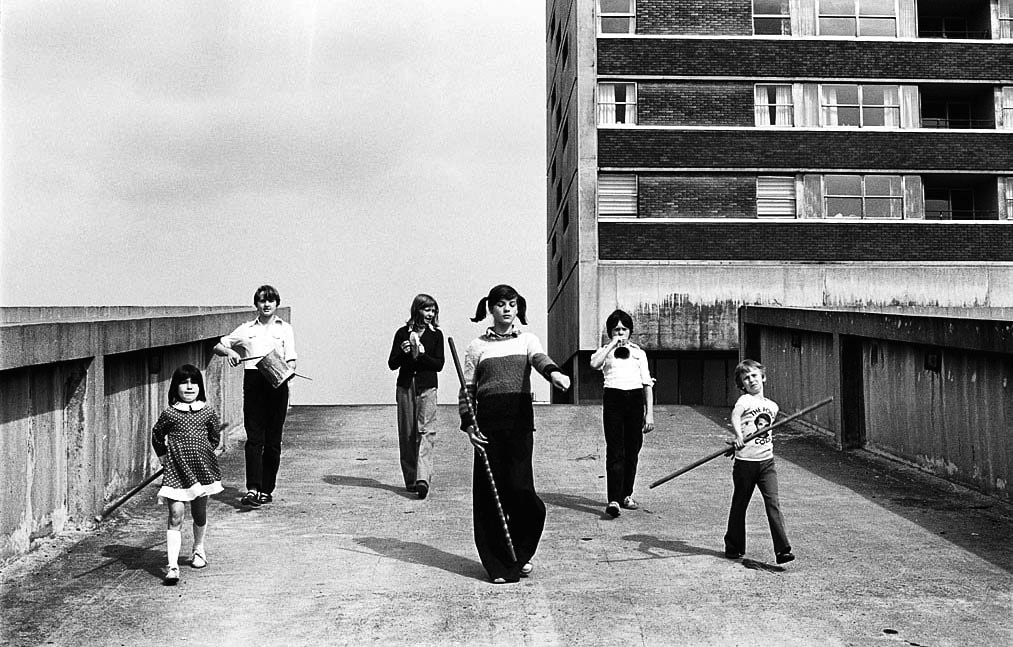
Child rights are an inseparable part of human rights, pointing to what human rights specifically require for children.
Child rights are human rights. They define the principle that every child is inherently valuable and unique, possesses the right to self-actualization simply by existing, and is therefore owed appropriate treatment. They establish a distinct status for everyone under the age of 18, and the struggle for children’s rights is grounded in this recognition. They constitute a demand for the elimination of all forms of degrading and abusive treatment toward children. They are the loud expression of the demand for a better world, equality, and justice for every child. The fundamental basis of this demand is the concept of human rights.
Child rights are an inseparable part of human rights, and point to what human rights specifically require for children. Therefore, it is important to engage with the concept of human rights and the sub-concepts it encompasses. Indeed, “when the content of a concept is vague, but everyone assumes they understand it, the concept becomes dangerous.”1 It is also clear that the concept of human rights is generally evaluated among the dangerous and threatening concepts by those in power, and that transforming this perception is a primary necessity.
The basis of the human rights concept is inseparable from the concepts of human being and human dignity. These concepts have been discussed in fields such as philosophy, politics, and law since ancient times. This is because human beings are capable of action. They think, feel, and act; they choose action or inaction. They discover, produce, accumulate, and rebuild upon what they have accumulated. They have the capacity, power, and possibility to act. This, of course, does not mean that humans are superior as a species or entitled to use their power and capacity unconsciously. On the contrary, it points to the power, potential, and responsibility to choose not to harm and to translate this into action, which is what makes a human valuable.
The idea of human rights, which refers to the set of rights “that all people possess simply because they are human,” foresees that every individual should be able to live their life in an equal, free, fair, and dignified manner. It defines the prohibition of discrimination against race, colour, age, sex, sexual orientation, gender expression and identity, language, religion, political or other opinion, national or social origin, property, birth, or any other status.
“Human rights are ethical principles in an active and passive sense: they articulate the treatment people should receive and the treatment they should show to others. At the same time, they constitute an attempt to bring ethical demands to social regulation, law, and politics. They emerge from the demand to recognize and protect human dignity, that is, to protect people simply because they are human. In this context, protecting human rights points to philosophical, ethical, and political challenges. (2011).”
Although human history has witnessed countless human rights violations, from slavery to racism, from atrocity and torture to massacres, the transformation of human rights into a global voice dates back to the mid-20th century. Especially, the reaction to the horror and crimes against humanity created by Nazism’s massacre of more than six million people during World War II strengthened the ground for the principle of “never again”2 to be decisive in human rights violations. In this context, the Universal Declaration of Human Rights3, proclaimed in 1948 to contribute to the establishment of peace and to define human rights standards in international law, stands as one of the key turning points.
International human rights law, based on human rights standards, defines the obligations of states towards each other and towards all rights holders within their own borders, whether citizens or not. Accordingly, states have three fundamental obligations:
- To respect human rights
- To secure human rights
- To protect and fulfil human rights
It is clear that the primary addressee of these obligations is the rights holders. Every human is a rights holder; they have rights, can claim those rights, hold duty-bearers accountable, and have the responsibility to respect the rights of others. Duty-bearers, in turn, have the responsibility to respect, secure, protect, and fulfil the rights of the rights holders. Therefore, the relationship between rights holders and duty-bearers is expected to be based on human rights, i.e., to be rights-based.
The moral of the story is that human rights violations are not matters of disposition, fate, fortune, accident, isolated incidents, exceptions, or natural disasters. Nor is it acceptable to present the protection of rights as a benevolent favor, or to dismiss violations by saying “what’s done is done,” “life goes on,” or that they are a matter of national survival.
Why Are Children’s Rights Defined Separately Within the Field of Human Rights?
Children’s rights are defined separately within the framework of human rights because human rights have specific requirements when it comes to children. Indeed, the current world order, still constructed by adults, continues to ignore children’s human rights, and violations of children’s rights continue and are even increasing.
Therefore, children’s human rights are specifically defined to protect children from the recklessness of adults, especially decision-makers, and the human rights violations they cause.
The existing system views the child as an object for the continuation of the system rather than as a rights holder. Children are instrumentalized, disregarded, and denied political participation, including the right to vote. Moreover, children are at a particular stage of development, yet their views are rarely taken into account. They cannot play a meaningful role in the political processes that shape governments’ human rights positions, they face serious barriers to accessing justice to protect their rights, they often cannot seek legal remedy when violations occur, and their access to organizations that defend their rights is limited. Together, these factors both lay the groundwork for rights violations and contribute to their persistence and increase.
The need to change deeply ingrained attitudes and perceptions that objectify, subjugate, devalue, and “pretend” to care for the child, and to adopt an approach that believes in and supports the empowerment of the child’s potential, maintains its urgency. Therefore, children’s human rights are separately defined to protect children from the recklessness of adults, especially decision-makers, and the human rights violations they cause.
“Humanity owes children the very best it has to offer.”4
We see that social contracts, defining the efforts to protect children’s human rights and the obligations of decision-makers, have accumulated gradually throughout history. The most comprehensive document, and still considered the fundamental one, is the United Nations Convention on the Rights of the Child (CRC)5, written in 1989, with its optional protocols6, and the general comments7 of the Committee on the Rights of the Child.
The Convention achieved near-universal ratification worldwide in a very short period of time, making it the most widely ratified international treaty.8 This is also a hopeful sign, as it shows that despite numerous disagreements, conflicts, and wars, countries around the world have found common ground on the fundamental issue of children’s human rights.
The CRC consists of 54 articles and has 4 fundamental principles.
- The Principle of Non-Discrimination: Children’s rights apply to all children without exception. States Parties to the Convention recognize and commit to guaranteeing the human rights of all children within their jurisdiction without discrimination of any kind. The prohibition of discrimination is defined in Article 2 of the Convention. In human rights literature, the prohibition of discrimination defines the right of all people to equally possess rights and freedoms and have the right to benefit from these rights equally.
- The Principle of the Best Interests of the Child: The principle of the best interests of the child supports a child-centred perspective and considers the child’s interrelated rights and needs. It defines the necessity of taking the child’s best interests into account when evaluating laws, policies, and practices aimed at protecting children’s human rights, and prioritizing the child in service planning. All articles of the CRC, especially Article 3, are grounded in the principle of the best interests of the child.
- The Principle of the Protection of the Child’s Right to Life and Development: Life and development are the fundamental rights of every child. Article 6 of the CRC states: “Every child has the inherent right to life. States have the obligation to ensure the child’s survival and development.”
- The Principle of Child Participation: The concept of child participation was first formally introduced with the CRC to ensure the full adoption of the culture of democracy and human rights in all societies. The child’s right to participation, specified in Articles 12, 13, and 15 of the Convention, refers to “the active involvement of children and young people in issues, decisions, activities, and processes that concern them.” The articles in the CRC that specifically define the child’s right to participation are as follows:
- Article 12: “Every child has the right to express their views freely in any matter or proceeding concerning them, to have their views taken into account, and to participate.”
- Article 13: “The child has the right to freedom of expression, including the freedom to seek, receive, and impart information and ideas of all kinds.”
- Article 15: “Children have the right to associate with others, to form and join associations.”
Participation, defined as “taking part in public life” and “being a part of public life,” means the involvement of children in decision-making processes and activities, being “effective” in these processes, and making “active” interventions in decision mechanisms, implementation, and evaluation processes. Participation, along with “pluralism,” “human rights and freedoms,” and “the rule of law,” is among the fundamental principles of democracy. If a child does not experience democracy and human rights at home, at school, on the street, and in politics—which is essentially every area of life—it is unrealistic to expect them to live by these principles later in life.
The principles and framework of the CRC reinforce the obligation to strengthen the rights-based approach in protecting children’s human rights, to address this approach holistically, to create space for children to express their views—especially on all matters concerning them, since there are no matters that do not directly or indirectly affect children’s lives—and to take these views seriously.
So, What Is Meant by a Holistic and Rights-Based Approach?
A holistic and rights-based approach can be defined as an approach aimed at creating mutually reinforcing policies, laws, organizations, and practices to ensure that children’s human rights are not violated; that, when violations do occur, effective, restorative, and healing interventions are carried out; and that complementary policies, laws, organizational structures, and practices are put in place to ensure that similar violations never happen again. This approach can be described as a roadmap for public administration and a checklist for the children’s rights movement. Its requirements are closely interconnected and multidimensional. In general, these requirements include the following:
- Prioritizing the guarantee of the human rights of every child.
- Achieving consensus on children’s human rights and their protection.
- Conducting research on the root causes of violations.
- Producing rights-based data.
- Ensuring children’s meaningful and active participation.
- Establishing and diversifying complaint mechanisms for children.
- Establishing a chain of responsibility based on merit.
- Prioritizing the allocation of all types of resources, especially budget.
- Ensuring accountability and transparency.
- Developing and implementing short, medium, and long-term preventive and protective planning and practices (across all areas affecting children, to prevent violations, to respond when they occur, and to ensure they never happen again)
- Structuring rights-based monitoring, evaluation, and reporting processes.
- Being open to independent monitoring mechanisms.
- Combating the culture of impunity regarding every violation of children’s rights.
As a concluding remark, this article has attempted to present the fundamental framework regarding children’s human rights. The summary is this:
- “Children are human.” Every child is a rights holder.
- The children’s human rights are universal, indivisible, and inalienable.
- The State has the obligation to respect, secure, and protect the human rights of every child.
- The human rights of the child are realized only through the empowerment of the rights holders.
- Children’s human rights are neither less valuable than adults’ human rights nor a benevolent favor.
*This article draws inspiration from the work of many organizations and individuals, particularly Gündem Çocuk Association, with whom the author has worked within the children’s rights movement.
Translated by: Eda Nur Bursalı
Reviewed by: Aslı Taşçı
- Kuçuradi, I. (2011). İnsan Hakları Kavramları ve Sorunları. Türkiye Felsefe Kurumu Yayınları (İlk Baskı, 2000). Ankara ↩︎
- The principle of “never again” focuses on what must be done to combat the culture of impunity in order to prevent a human rights violation from being repeated. It centers on the structural and historical causes revealed by violations, as well as on the structures inherent in the state and society that must be transformed. Toker Kılınç, N., Akbaş Demirel, C., Körükmez, L., & Niter, N. (2021). Türkiye’de İnsan Hakları Mücadelesinin Değişim Hatları: İnsan Hakları Derneği Örneğinde Uluslararası Mekanizmalar, Yerelleşme ve Dayanışma. Türkiye İnsan Hakları Vakfı. Ankara, p. 50. ↩︎
- İnsan Hakları Derneği (İHD). “İnsan Hakları Evrensel Beyannamesi.” ↩︎
- League of Nations. Geneva Declaration of the Rights of the Child. Geneva, 1924. ↩︎
- See UNICEF Türkiye, “Çocuk Haklarına Dair Sözleşme” [Convention on the Rights of the Child] ↩︎
- Related Optional Protocols:
Optional Protocol to the Convention on the Rights of the Child on the Sale of Children, Child Prostitution and Child Pornography
Optional Protocol to the Convention on the Rights of the Child on the Involvement of Children in Armed Conflict
Optional Protocol to the Convention on the Rights of the Child on a Communications Procedure ↩︎ - UNICEF Türkiye. “Çocuk Haklarına Dair Sözleşme ve İhtiyari Protokoller: Usul Kuralları ile Çocuk Hakları Komitesi Genel Yorumları.” ↩︎
- Turkey signed the Convention in 1990, ratified it in the Turkish Grand National Assembly (TBMM) in 1994, and incorporated it into domestic law by publishing it in the Official Gazette in 1995. Since Article 90 of the Constitution recognizes signed and ratified international treaties as part of domestic law, each article of the Convention has, since 1995, become legally binding and applicable to all children in Turkey. However, during the ratification of the CRC, Turkey entered reservations to three articles (Articles 17, 29, and 30) that refer to issues of mother tongue, minorities, and ethnic identity. In international law, entering a reservation indicates that domestic legal arrangements are not yet considered adequate for the implementation of the relevant provisions. Consequently, both the United Nations Committee on the Rights of the Child and the children’s rights movement have consistently renewed their calls for these reservations to be withdrawn. ↩︎